
Digital technologies in animal health: focus on the dairy industry (Part 1)
Julia • June 11, 2020

In the broad spectrum of fascinating materials, biomaterials and materials that our body makes, like blood and milk, have a special place. These are extremely complex materials that only our (or animals) bodies can make. For instance, we still drink milk from cows, goats, and buffaloes, we donate blood to save lives, and we extract stem cells from bone marrows. The sheer complexity of some materials does not allow us to easily re-engineer them. Milk is one such amazing material.
Composition of milk
Milk is a rich material from a composition perspective, containing fat, proteins, lactose, water and minerals. Complexity of milk as a material arises from the manner in which many of the components exist in it. For instance, fat exists as globules in an oil/water emulsion. The size of these globules is about 1–10 microns and can be seen under an optical microscope. Cow’s milk typically has 3–6% of fat. Some breeds like the holstein (the one with black and white patches) produce lower fat (3–4%), whereas other breeds like the jersey (smaller brown ones) produce higher fat (5%). The amount of fat also varies with the type of animal. Buffaloes, for instance, produce milk with about 8% fat. There are several types of proteins in milk including casein (majority) and whey proteins. Casein exists in a colloidal form with micelles in the 10–100 nm range, which can be seen under an electron microscope. Since the size of protein micelles and fat globules is comparable to the wavelengths of visible light, they act as scatterers. Scattering by fat globules in relative wavelength independent, so we see that thick, white, opaque feature of milk. Scattering by protein micelles is governed by the Tyndall effect, where blue light is scattered more than red. This explains why skim milk (0% fat, only protein) has a slight bluish tinge (also our iris looks blue due to the same reason!). In addition to fat and protein, milk contains lactose (sugar) that is found completely dissolved as a true solution. As you can see, this is a complex mix of many organic molecules organized across various sizes. And this is a simplified picture of what milk contains. There are minerals, vitamins A, D,K, riboflavin and who bunch of other molecules in milk! Isn’t that amazing!

Typical composition of cow’s milk
Composition of Raw milk
Milk that we buy in a grocery store is generally standardized (maintain same composition), homogenized (so that fat doesn’t separate) and pasteurized (to remove pathogens). However, fresh raw milk has a different composition. One major difference between raw and processed milk relates to the presence of somatic cells in raw milk. Somatic cells are typically white blood cells (leukocytes) that can be found in milk that is freshly obtained from a cow. Apart from somatic cells, raw milk can have bacteria and other microbes, and antibiotic residues if the cow is being treated.
Composition of Raw milk
Milk that we buy in a grocery store is generally standardized (maintain same composition), homogenized (so that fat doesn’t separate) and pasteurized (to remove pathogens). However, fresh raw milk has a different composition. One major difference between raw and processed milk relates to the presence of somatic cells in raw milk. Somatic cells are typically white blood cells (leukocytes) that can be found in milk that is freshly obtained from a cow. Apart from somatic cells, raw milk can have bacteria and other microbes, and antibiotic residues if the cow is being treated.

Optica's 2025 Entrepreneurs to Watch list names Labby co-founder Julia Somerdin for her work advancing real-time optical milk intelligence.

Labby presents at the Animal AgTech Innovation Summit 2025, sharing how real-time milk intelligence is transforming dairy farm decisions.

Milk yield isn't just about volume. Discover 3 data-driven insights that reveal herd health, feed efficiency, and production opportunities.

Chronic mastitis can quietly cut farm profits. Learn how Labby's real-time SCC analyzer detects early warning signs and prevents losses.

Enhance your dairy farm's milk production with Labby's real-time testing technology. Improve feed efficiency & cow health for better yields.

Reducing antibiotic usage is key to healthier herds and sustainable dairy farming. Discover 3 practical tips on how Selective Dry Cow Therapy (SDCT) and real-time SCC monitoring can help farmers cut antibiotics while maintaining milk quality and herd health.
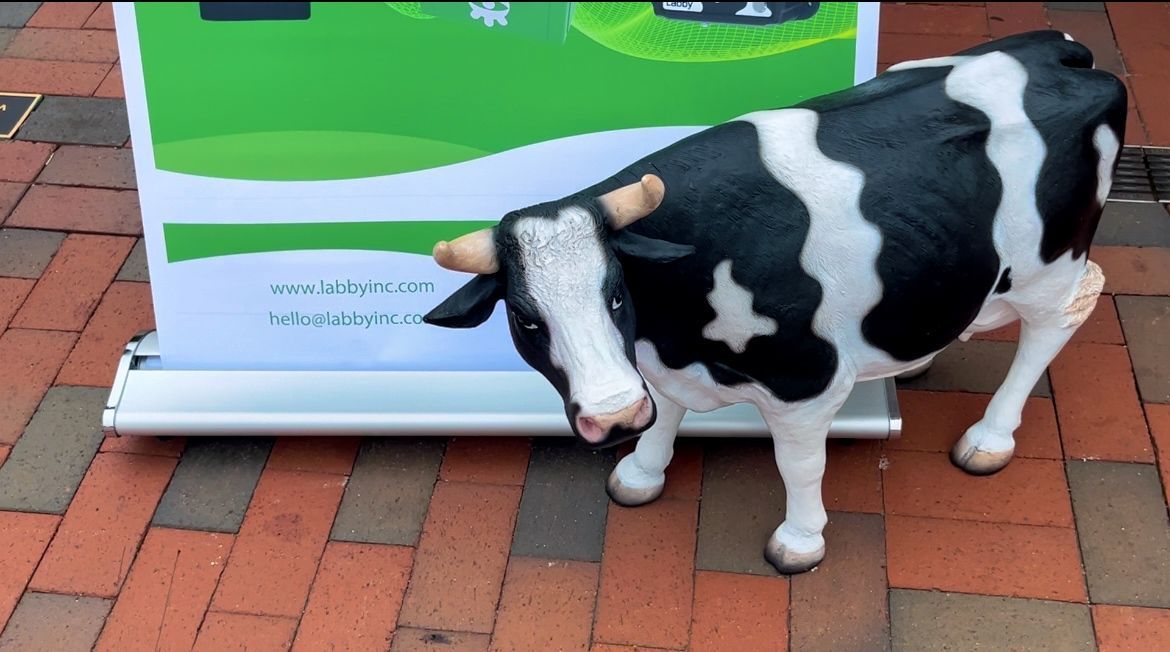
Labby demos its real-time milk intelligence platform at Boston Climate Tech, showing how optical sensing supports dairy decarbonization.

Luminate highlights Labby's MilKey platform for bringing lab-quality milk analysis to dairy farms, earning growing national recognition.

Dairy data management is changing fast. Survey insights reveal which technologies farmers are adopting — and what's coming next.

Labby visits Massachusetts dairy farms to validate real-time milk testing technology in real-world parlor conditions.
